Mixed Signals, Sharper Strategies
As 2026 began, the meetings and hospitality industry found itself in a moment of recalibration. Economic signals remained mixed, expectations were sharper, and how organizations planned, booked, and experienced live events continued to evolve.
During the annual Teneo Summit in late 2025, Teneo leaders sat down with planners and hoteliers to discuss the future of the industry heading into 2026. What emerged wasn’t a checklist of trends, but a series of structural shifts.
Success in the year ahead will be defined by clarity, flexibility, and an ability to create experiences that feel intentional. What that means in practice varies, but the following takeaways offer some ideas.

Guests mingle and network at Teneo Summit 2025
A Cautious Market with Clear Bright Spots
Hotel performance continues to feel pressure from the effects of fluctuating occupancy, increased supply, and alternative lodging options that compete for group overflow and transient demand. At the same time, luxury and upper-upscale properties with a strong sense of place and service culture continue to outperform broader averages.
The Rise of the Strategic Planner
For meeting planners, flexibility means evaluating destinations and properties beyond traditional patterns, considering alternative dates or secondary markets, and aligning program goals with hotels that can deliver value beyond room blocks. Intentional planning — selecting partners who truly understand group needs and can adapt — helps planners secure better outcomes while supporting hotel performance in a constrained environment.
Value Alignment Is Driving Booking Decisions
Rising travel-related costs, especially food and beverage, remain one of the most significant pressure points for planners. As budgets tighten, scrutiny has shifted from headline rates to total value. What’s included, what’s flexible, and what truly supports the program are now central questions, and, as such, fees continue to play an outsized role in site selection.
Resort and destination fees, in particular, are being evaluated through a business meeting lens. This has led to a preference for group-specific and/or bundled fee models that can preserve program quality while staying within budget.
At the same time, contract language is becoming more precise. Clarity and transparency around any program related fees, early check-in policies, name-change restrictions, and emerging considerations such as AI-related fraud or visa-based travel disruptions are likewise essential.

Scenario Planning Is the New Baseline
Volatile attendance patterns, shifting approval processes, and broader economic uncertainty have made scenario planning standard practice. Planners and their teams are building multiple program models earlier, allowing them to pivot without sacrificing experience quality.
Hotel partners that support this flexibility and engage early are increasingly viewed as strategic collaborators rather than transactional vendors. Their ability to adapt without friction will be a differentiator.
Differentiation Matters More than Ever
As consolidation continues across the hotel landscape, planners are re-evaluating properties that once stood out for independence and flexibility. In response, demand is rising for boutique and independent hotels that offer a clear point of view, authentic storytelling, and experiential distinction.
Differentiation today isn’t about novelty for novelty’s sake. Stand out by creating environments that feel purposeful, memorable, and aligned with the goals of the event itself.
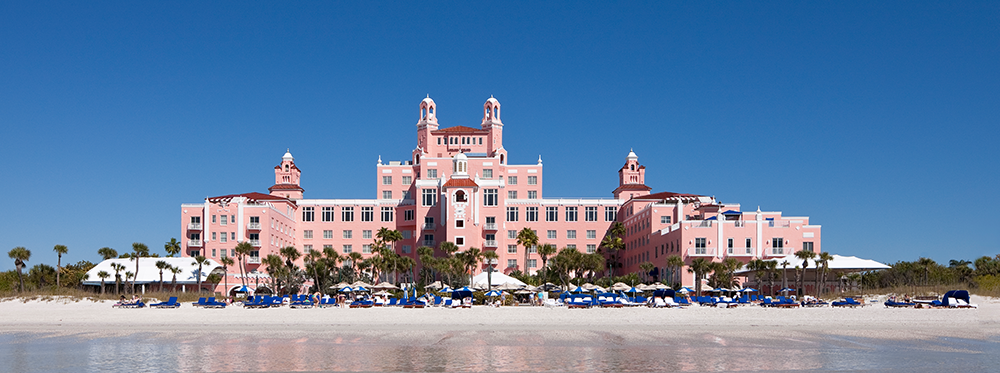
Florida’s The Don CeSar is one such independent gem whose iconic architecture and service consistently draw business
Sustainability as Expectation, Not Optics
Sustainability has moved firmly from aspiration to expectation. The focus, however, has shifted from perfection to intention. Meaningful progress now outweighs performative gestures.
Planners and suppliers are integrating sustainability in unobtrusive ways, whether through sourcing decisions, waste reduction, or measurement tools tied to broader ESG goals. When environmental impact can be measured and communicated, internal support follows.
Technology Accelerates, Relationships Endure
AI and tools that enhance personalization, streamline workflows, and centralize data continue to dominate industry conversations and reshape how teams operate. Used well and paired with experience, judgment, and context, technology accentuates insight for stronger outcomes. Take care, however, because if used poorly, an over-reliance on technology strips away nuance.

From Experiential to Transformational
Event design is moving beyond experience for experience’s sake. Attendees increasingly expect programs to feel meaningful, personal, and emotionally resonant.
This shift is visible across program flow, attendee activities, and even culinary design with customized menus, elevated non-alcoholic offerings, and bespoke culinary concepts becoming baseline expectations. Social and digital engagement are being woven into experiences with intention, extending impact before, during, and after the event.
The goal is no longer to impress, but to create moments that stay with people.
Collaboration as a Competitive Advantage
Lead times continue to vary widely. Some programs are booked years out, while others are executed on compressed timelines. In both cases, outcomes improve when teams align early.
The most effective programs are built when planners, hotels, destinations, and production partners operate as one coordinated ecosystem. Honest dialogue, shared objectives, and a willingness to challenge assumptions create stronger results.

Looking Ahead
Face-to-face connection remains irreplaceable. Technology will continue to evolve how experiences are designed and delivered, but it will never replace the power of human interaction.
As the industry moves into 2026, the direction is clear. Precision matters. Flexibility wins. Experiences that feel intentional, inclusive, and human will define the next chapter of meetings and hospitality.