The New Non-Negotiables for Evaluating Destinations
In today’s meeting landscape, where demand can surge around a single moment on the global calendar, understanding how destinations actually function under pressure has become as important as the destination itself. Groups are no longer just choosing where to go—they’re weighing how a city will perform when it’s at its busiest, most visible, and often most strained.
That shift is something Teneo Hospitality Group sees play out across its work with hotel and destination partners worldwide, supporting planners across more than 75 countries and with more than 1,500 meetings and events annually. The patterns are clear: what once felt like edge-case considerations – security, infrastructure, contingency planning – have moved to the center of the decision-making process.
Today, mega-events have permanently altered how planners choose destinations and build group programs around them. In a recent Q&A with Prevue Meetings, Teneo Hospitality Group President Jamie Bruce outlined why a destination’s safety, security, and city-wide contingency infrastructure are non-negotiables when evaluating its potential, especially when it’s operating at peak capacity.
Committing to a compressed destination is one decision. Executing a program inside one is another, and it requires fundamentally different planning.
Here, we explore what it takes to run a great program in an in-demand destination.
Compressed Destinations Equal Compressed Timelines
When a mega event is in town, demand for space can last well beyond a single peak weekend. Multi-week entertainment residencies, extended award-season calendars, and month-long sporting competitions can sustain compression in major markets — sometimes for weeks at a time.
Planners who previously had to avoid a single high-demand date or weekend now face booking during multiple conflicting events, during which they’ll face at or near peak hotel inventory, restaurant capacity, transportation resources, and staffing levels.
What once required six months of advance planning for a large citywide may now require nine to twelve, particularly in markets with recurring calendars — Las Vegas, Miami, Los Angeles, New Orleans — where the density of overlapping events is predictable but relentless. Planners who have not built that reality into their timelines will find it waiting for them when they arrive.
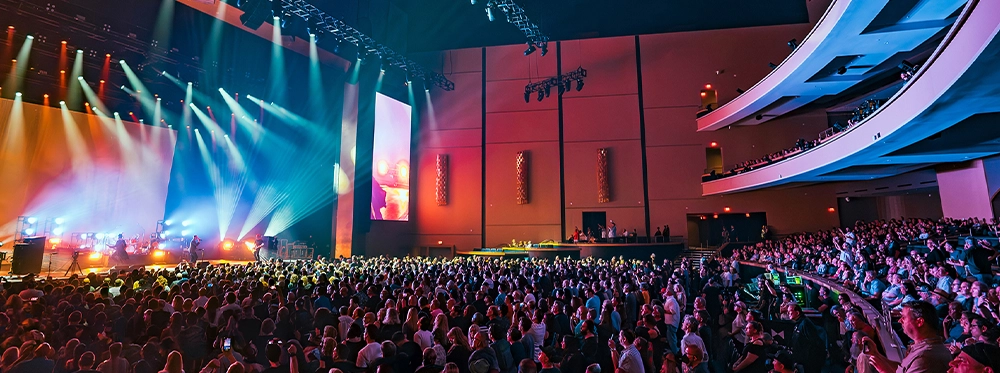
Fontainebleau Las Vegas’ BleauLive Theater
How Planners Adjust to Compressed Markets
Groups that commit to a destination during a high-demand period will have to adopt a more deliberate strategy, from activity planning to how to move people through a compressed city.
- Shift arrival and departure windows to non-peak travel days. Flying in on the first day of a major event and out on the last is a formula for stress. Groups that stagger their travel around the demand peaks — arriving a day earlier and/or departing mid-week — consistently report better experiences at the airport and at check-in.
- Culinary programming now requires the same lead time as venue selection. Thinking about a dine-around program in a compressed market? Restaurants bookable six months ago may not be bookable at all if you wait until the four-month mark.
- Transportation planning involves more than transfers. Rather than a general transfer plan, programs operating in a compressed destination need routing that accounts for road closures, event venue egress patterns, and driver (or shuttle) availability well ahead of schedule.
- Partner communication starts earlier and runs more frequently. It’s highly likely that properties, DMCs, and local vendors operating during a mega-event are managing multiple programs simultaneously. Groups that establish clear communication protocols early — and maintain them — are better positioned to resolve issues quickly when conditions change.
Don’t Call it a Fallback. Secondary Markets Are a Strategy
The conversation about mega-events has largely framed secondary markets as the safe alternative when a primary destination is too crowded; however, that framing understates what these markets actually offer.
Destinations with strong group infrastructure but lower event-driven volatility provide something compressed urban markets cannot: predictability. Planners know what they are getting and what they can reliably deliver.
For programs where the primary objective is focused engagement — strategic off-sites, incentive programs built around immersive experiences, leadership gatherings — second- and even third-tier cities can still offer culturally rich activities without the added stress (and possibly cost) of a destination in high demand. Also consider that, for some attendees, the experience of a secondary market could be novel enough to drive registration and interest in a program.
The planners expanding their consideration of these markets are not retreating from exciting destinations. They are making a deliberate choice about what the program actually needs to succeed.
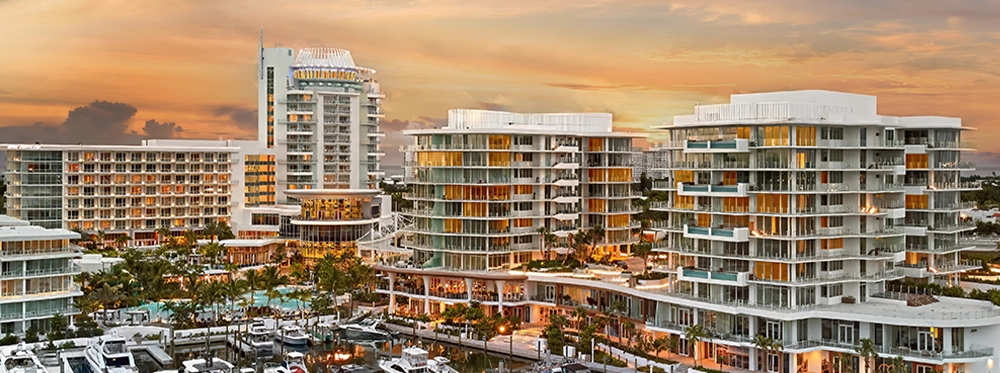
Just 30-minutes north of Miami, Ft. Lauderdale makes an attractive alternative, with options including the luxurious Pier Sixty-Six
If You Can’t Beat Them, Join Them: Integration as a Program Design Decision
One of the more significant shifts in how large programs approach mega-events is the move from passive coexistence to active integration. Groups that once created agendas to minimize overlap with a mega-event are increasingly doing the opposite — and finding that hotels with built-in entertainment and experience-forward venues make that integration operationally straightforward.
The logistics of integration are worth examining closely. Take Sphere at The Venetian Resort Las Vegas. Groups at the resort can coordinate with the on-site events team to offer blocks of tickets to attendees, giving them a chance to watch a show in a world-class venue. Is the mega-event sports-related? Consider a themed off-site or tickets for top VIPs, or as an incentive reward, to tie-into the local setting. Done correctly, with the logistics locked in advance, these experiences could be one of the most distinctive hosted moments a program can offer.
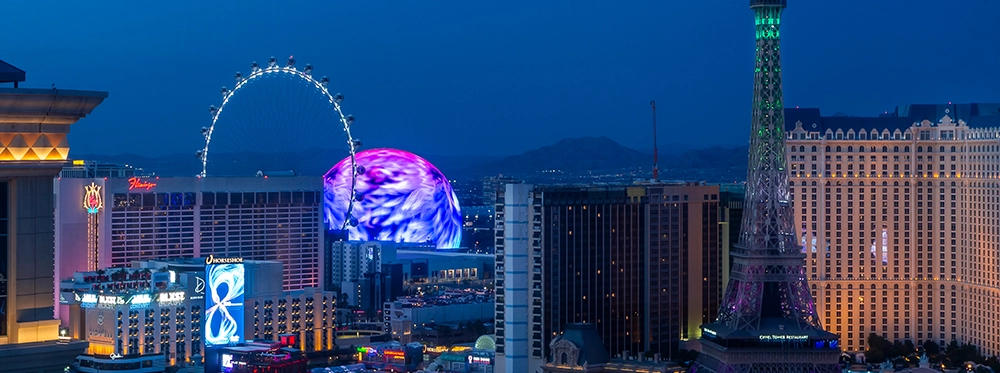
Sphere at The Venetian Resort Las Vegas
Integration is not right for every program. For some meetings, the destination should recede entirely so the content can lead. But for incentive programs and annual conferences where the destination is part of the value proposition, designing around what the city is already doing — rather than against it — tends to produce stronger engagement.
Mega-events are not going away, and neither is the compression they create. The planners who treat that as a fixed constraint — something to work around — will always be behind it. The ones building programs that are designed for it from the start will find that a destination at full capacity can still deliver exactly what their attendees came for.
.